One speed, three speeds or seven? Let the hills on your two-mile errand decide
Reclaim CA Higher Ed- Subject
- Choosing an upright, comfort-oriented bicycle for short casual riding, covering frame geometry, gearing, braking and the real cost of getting one road-ready
- Editor
- The Reclaim CA Higher Ed team
- Subject
- Choosing an upright, comfort-oriented bicycle for short casual riding, covering frame geometry, gearing, braking and the real cost of getting one road-ready
The useful number is gear inches, calculated from the chainring and rear cog tooth counts and the wheel size. Two seven-speed bikes can have completely different low gears depending on those numbers.
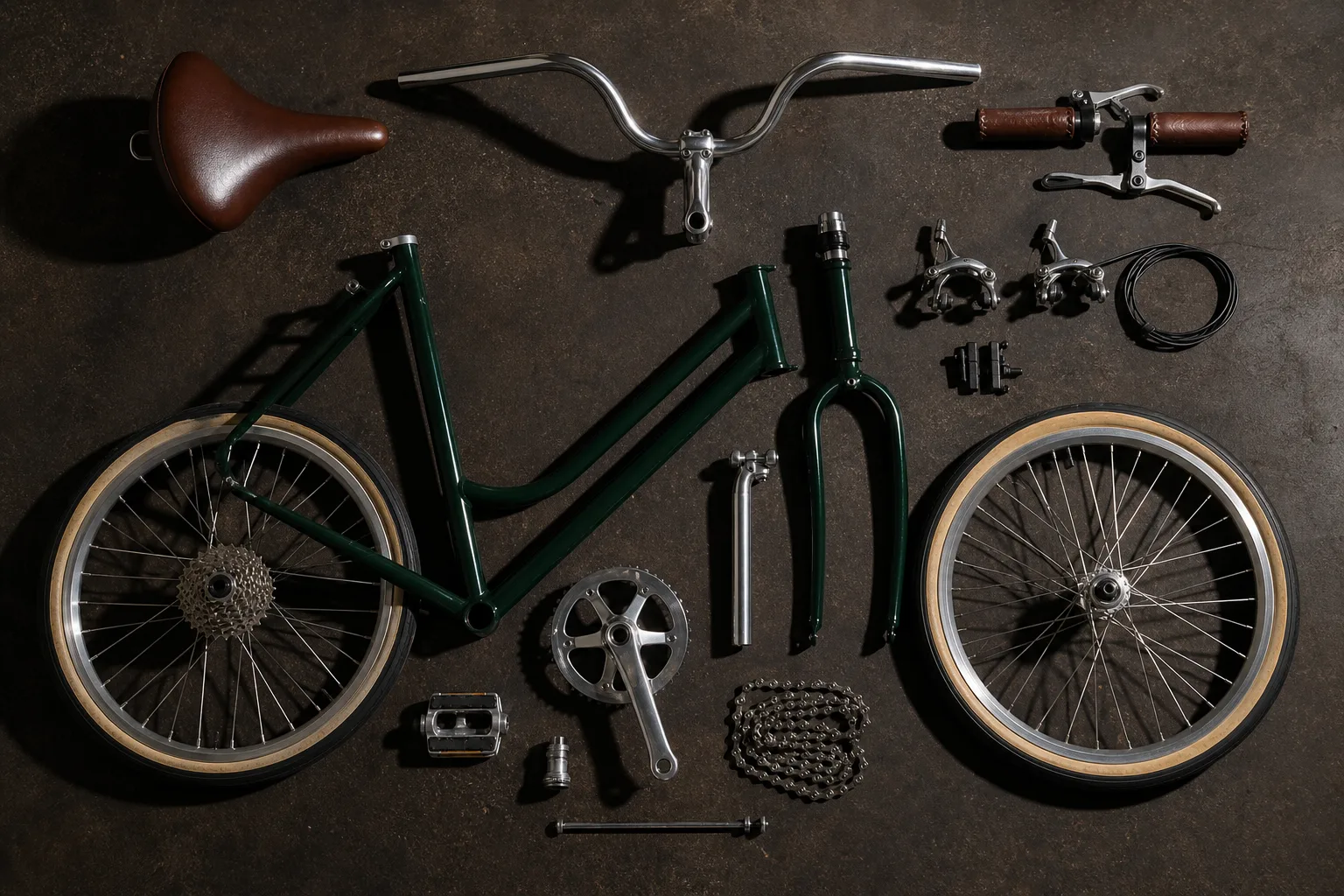
Gearing is the one decision on an upright bike that a shop cannot fix later without spending most of what a second bike would cost. Wheels can be trued, saddles swapped, tires replaced in ten minutes. Changing a single-speed rear wheel into a three-speed hub means a new wheel build, a shifter, a cable, and a rear brake that still has to fit around whatever is now in the dropouts. So the sensible order is to measure the route first, then pick the drivetrain that clears it, then worry about color.
What one gear actually asks of your legs
A single speed on an upright frame is the lightest and quietest option, with no shifter, no cable, no derailleur hanging in the path of a curb strike. The trade is that the gear you chose in the shop is the gear you have on every block. On flat ground with a sensible ratio, that is genuinely pleasant, and the chain line stays straight, which means the chain lasts longer and the chainguard does its job. The limit shows up on sustained grades, where the only remaining adjustments are standing on the pedals or walking. Careful readers notice that the limit is not steepness alone but steepness multiplied by length.
The three-speed hub and what the extra weight buys
An internally geared hub puts the mechanism inside the shell, out of the rain, out of the road grit, and out of reach of a bike rack. It adds weight at the worst place, the rear wheel, and you will feel that lifting the bike onto a bus rack or up a stoop. What you get back is the ability to shift while stopped, which matters more on a short errand route with lights than any amount of gear range does. Maintenance is a cable adjustment now and then and an oil service at long intervals, work most shops will quote as a flat rate. The usable range covers moderate neighborhood grades comfortably.
Seven speeds outside, and what the exposure costs
An external derailleur gives you the widest spread of ratios for the money, and on a bike that will meet a real hill with groceries aboard, that spread is the point. Everything hangs in the open: the derailleur, the hanger it bolts to, the cable, the cassette. A tipped-over bike in a parking lot can bend a hanger, and a bent hanger makes the whole system shift badly until someone straightens it with the correct tool. Adjustment drifts as a new cable settles, so budget for a follow-up tune after the first few weeks. Chains and cassettes wear faster because the chain runs at an angle in most gears, which is simply the cost of the range.
Measuring your route instead of guessing at it
Ride the route once on whatever bike you already have, and mark the places where you drop below a walking cadence or stand up. Those points, not the total elevation number, are what your gearing has to clear. Then look at the same route on a mapping tool that shows an elevation profile, and read the grade percentage rather than the pretty line, because a short 9 percent block and a long 4 percent grade feel nothing alike. Add the loads you actually carry: a full pannier, a child seat, a headwind off the water in the afternoon. The Consumer Product Safety Commission oversees the requirements that bicycles sold in the United States must meet, but nothing in those rules tells you which gear range fits your particular hill, and only the route does.
What a careful reader checks before paying
Ask the shop what gear inches the bike comes with, and if the answer is vague, ask for the chainring and rear cog counts, which take ten seconds to read off the parts. Check whether the rear wheel has a quick release or bolted axle, because that changes how a flat gets fixed on the road and whether a hub gear cable needs disconnecting first. Confirm the shifter type: a twist grip and a thumb lever handle differently in a glove. On a hub bike, ask what an oil service costs locally and how often. On a derailleur bike, ask whether the hanger is replaceable and whether the shop stocks the part.
Most short-errand riders on genuinely flat streets are happier with fewer gears than they expected, and most riders with one stubborn hill between home and the store are happier with more. The hill decides. Everything else is preference, and preference is cheap to satisfy once the drivetrain is right.